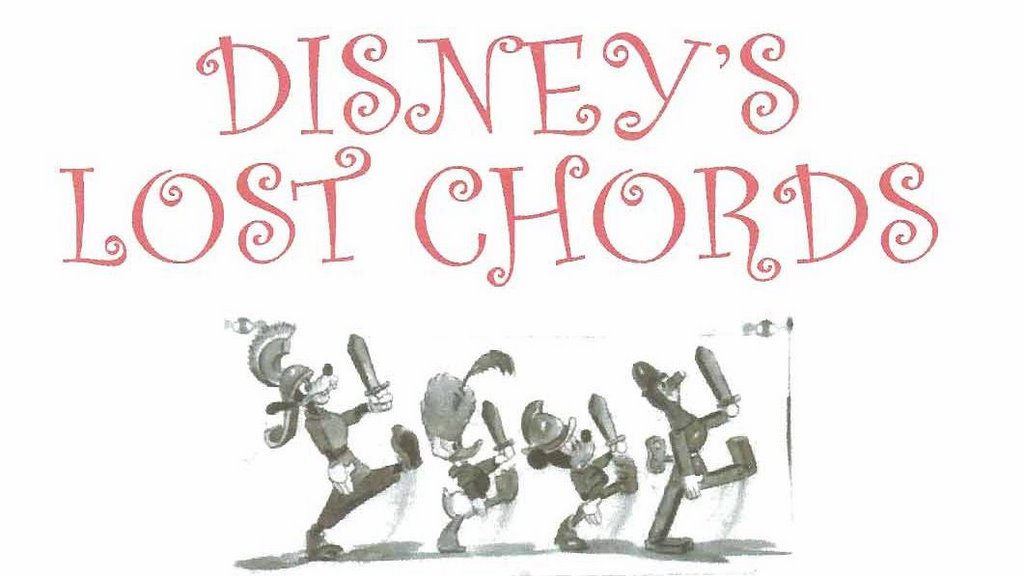
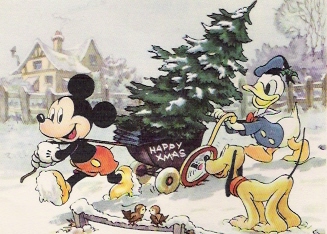
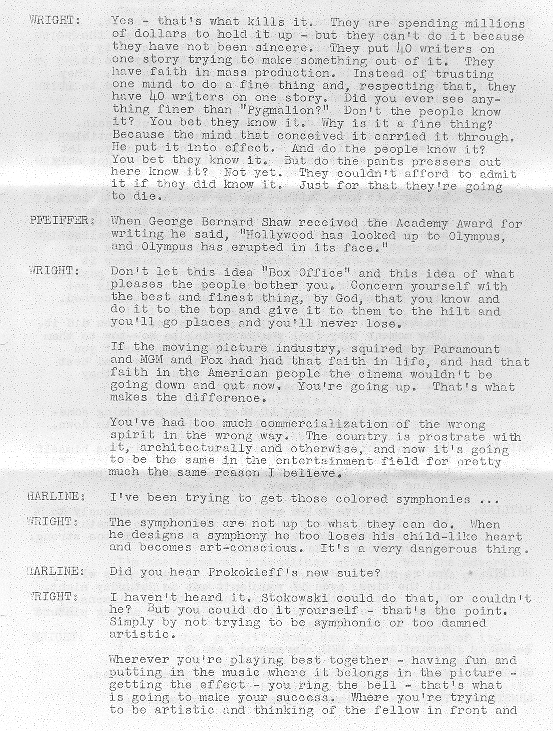
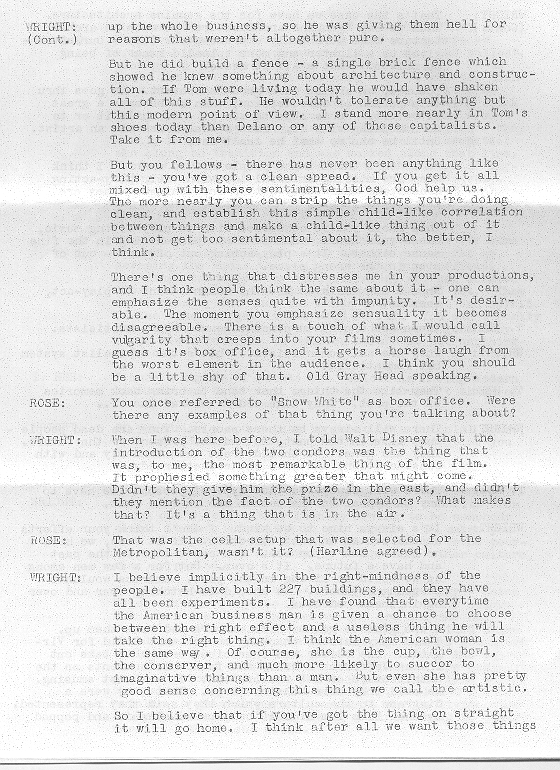
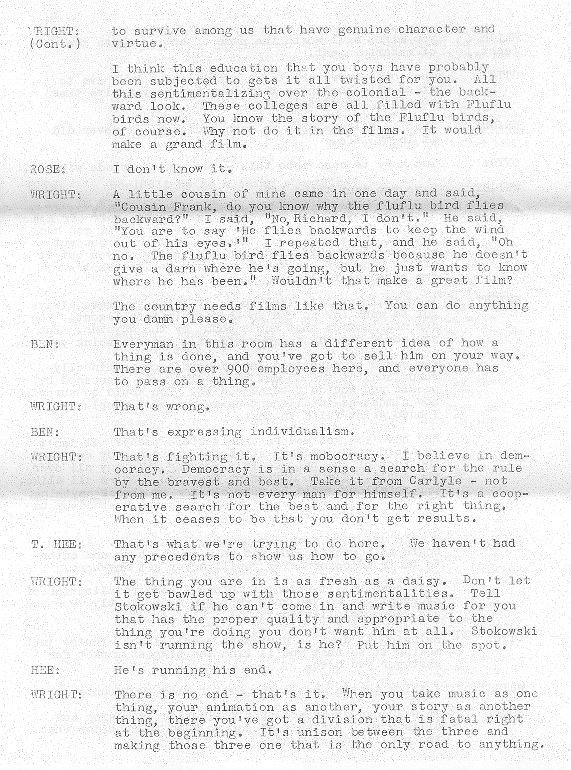
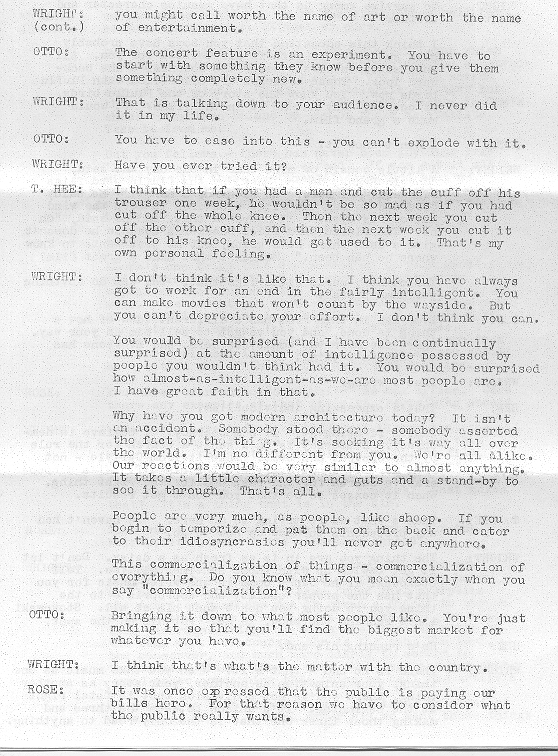
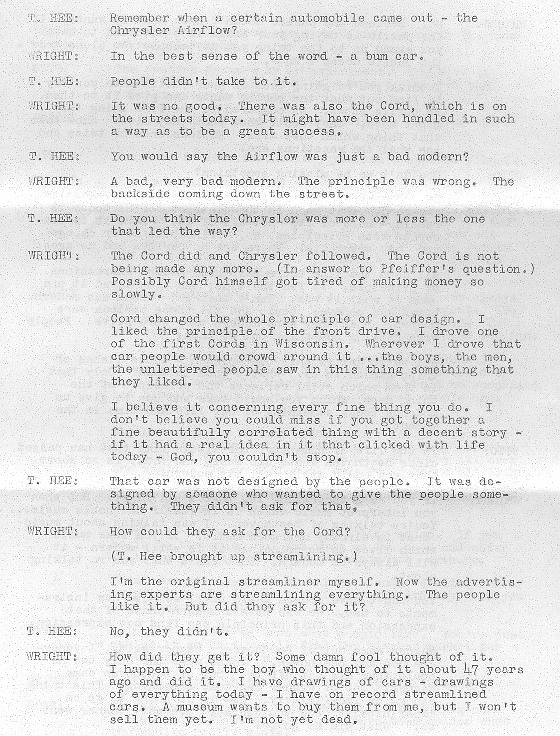
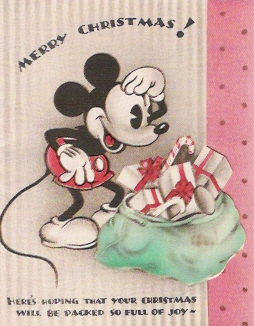
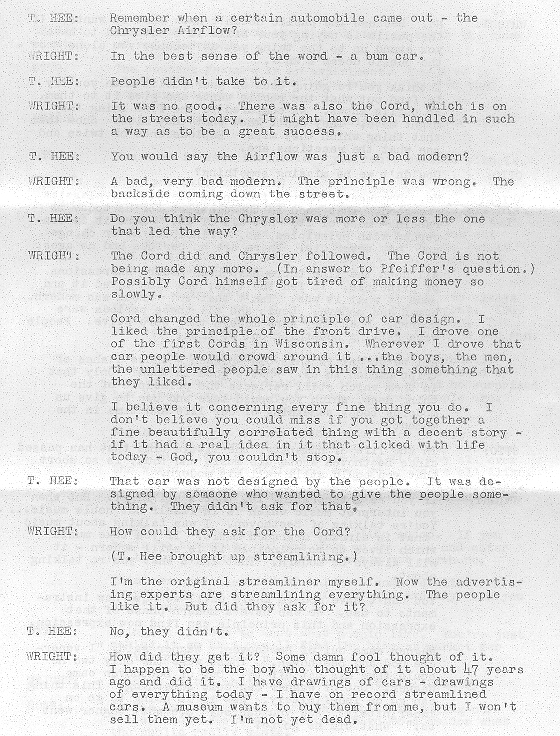
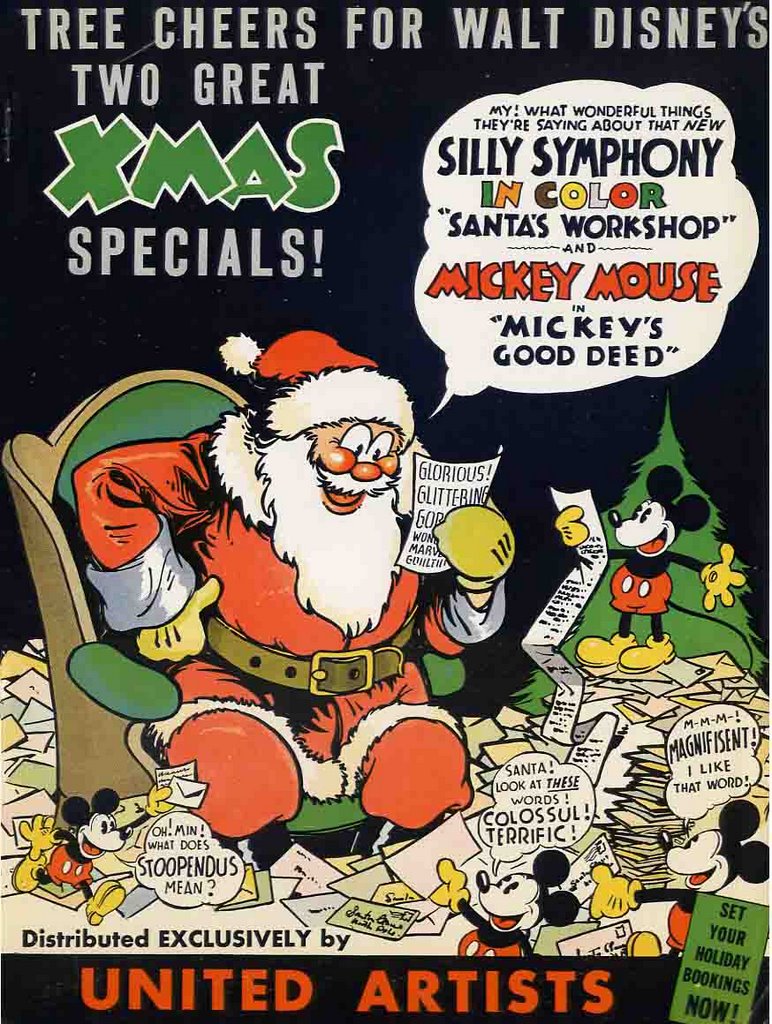
 From Mark Sonntag's collection come those two beautiful pages from the December 15, 1932 United Artist exhibitors book.
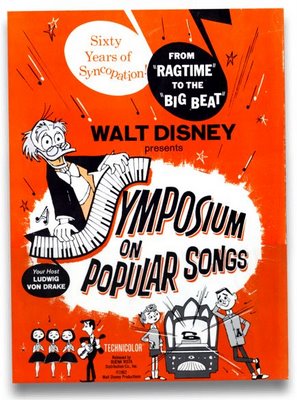

Are's list of movies that contain strong connections to the Disney universe generated more feedback than I had received since the launch of this blog. I am attempting to summarize this feedback below.
Jen wrote:
[I can name a couple of other non-Disney films with Disney connections:
Forbidden Planet (1956): Disney animator Joshua Meador created animated special FX sequences for this film.
And a more modern connection: A Christmas Story (1983): During the town Christmas Parade, the big movie featured with characters is The Wizard of Oz. At one point, the winged monkeys all decide to attack a Mickey Mouse walking in the parade.]
Tinker Bell said:
[I'd like to add Bachelor Mother (1939) starring Ginger Rogers. She works in Merlin's department store which sells many toy Donald Ducks that are roaming around quacking. That toy duck features frequently throughout the film. Very cute film!]
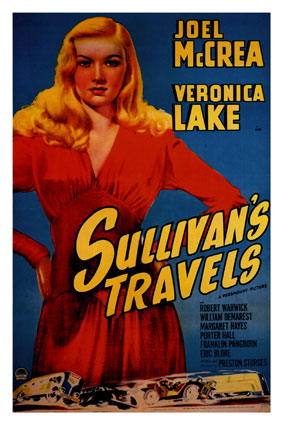
Both Nancy Beiman and FoxxFur pointed out the special status of the movie Sullivan's Travels. According to FoxxFur:
[The use of Playful Pluto in Sullivan's Travels is significant and deserves elaboration: it's actually the entire justification for the film and the filmmaker.
The film was directed by Preston Sturges, a very famous and popular maker of comedies in 1941. The film is about a very famous and popular maker of comedies who seeks the justification of having created an important, worldly, serious film, which he wants to call O Brother, Where Art Thou? (Yes, the Cohen Brothers got the title of their movie from this). His bosses contend that he, the blessed-with-luck young man, doesn't know enough about being miserable to make an important film. He responds to this by setting out on the road to learn what it's like to be miserable.
Anyway it's a hilarious and brilliantly written film. In the end of the film he ends up in the chain gang and has basically lost all hope. The chain gang is lead into a church where the Disney short is played. The entire group breaks into uproarious laughter immediately and he, initially disdainful of the short, begins to laugh too. After he's rescued from the chain gang he says: "I'm not going to make O Brother, Where Art Thou! I'm too happy to make O Brother, Where Art Thou!" and he cites the simple but noble relief from the grinding existence of labor that the Disney short provoked in the cons. He then goes on to state in no uncertain terms that making funny movies which make people happy is just as important as making serious, important films on issues of the day. Sturges uses the Disney film to justify his entire career.]
Finally, I got this long and detailed email from Jeff Peterson about Babes in Toyland and Once Upon a Time:
[For your information, the role of Mickey Mouse in Laurel & Hardy's Babes in Toyland is actually performed by a small monkey in a costume. When Mickey walks, it seems like the monkey is hoping that the mousehead will fall off if he shakes it enough. The most amusing scenes are when Mickey boards a dirigible and starts dropping bombs on the bogeymen below, until his airship is shot down and he has to escape viaparachute. As for the three little pigs, these characters were played by dwarfs in costumes (humans, not primate).
As for Once Upon a Time, Walt Disney's name is mentioned throughout the film since Cary Grant's character is hoping to make a lucrative dealfor the services of a dancing caterpillar named Curly. As Bosley Crowther hints below, the audience never gets to actually see the caterpillar dance. As for the actor playing Walt Disney, we don't really get to see his face, which is a good thing, since the imperesonation is not very Disney-ish (and neither is the film).
Here are two contemporary reviews of Once Upon a Time which I found on the Internet:
VARIETY Film Review - April 26, 1944
One of the more novel scripts of the year, Once Upon a Time is certainly bizarre - and yet charming. It's unfathomable - and yet intriguing. It is certainly absurd - and yet boxoffice.
Once Upon a Time will certainly excite a national wave of conflicting theories on its merits. It certainly must have required considerable courage for Columbia to have undertaken a production that manifests so few popular ingredients that make for big b.o. Because of its central character, such as it is, Once Upon a Time is, actually, the story of- a caterpillar! A dancing caterpillar! One that dances only to "Yes Sir, That's My Baby!"
Once Upon a Time was originally a radio play called My FriendCurly, by Norman Corwin (from an idea by Lucille Fletcher Herrmann). It excited considerable comment in radio circles when it was produced on CBS, but its film version, because of a more extensive production starring Cary Grant and Jane Blair, bids fair to create an even greater word-of-mouth.
The film's leading "character," of course, is one that's unbilled -that would be Curly, the caterpillar. Curly is the pal of nine-year-old Pinky, and it dances when Pinky plays "That's My Baby" on his mouth-organ. When a flop Broadway producer learns of this phenomenon, he sees a chance to gain its possession and exploit it sufficiently so that he can salvage his theatre from the bankers. Gabriel Heatter hears about the dancing caterpillar and gives it nationwide prominence in discussing it on his radio program. Then follows a deluge of offers to exploit the insect - and there's even a scene of Walt Disney, over long-distance phone from Hollywood, offering $100,000 for it.
The basic story may have difficulty in "reaching" an audience at first, but if one can accept the sheer fantasy for what it's worth, it can very well be excellent entertainment. There's considerable charm in the youngster's attachment for the insect through the close link that existed in the original radio play between the theatrical agent and the boy (in the film the agent is the theatrical producer) is somewhat lost. And that final reel - when the youngster has been overcome with grief over the loss of his caterpillar, only to learn that it wasn't lost at all but had since become a butterfly - is an exercise in screenfantasy.
Both Grant and Miss Blair may be starred in this film, but they must bow in performance to others not equally billed. Namely, Ted Donaldson, the youngster, who, in his first film appearance, is what publicity departments would call a find James Gleason, William Demarest and HowardFreeman are among the major supporting players who do okay.
That title really tells it. There's a foreword that suggests to the audience, in effect, to pull up a chair and relax. It's the kind of suggestion that had best be taken literally.
NEW YORK TIMES Film Review - June 30, 1944- by Bosley Crowther
Have you ever seen a dancing caterpillar? Of course not, and no one else has - except Cary Grant and all the people in Once Upon a Time, at the Music Hall. For it is such an incredible freak of nature, conceived in a whimsical vein, that is the fabulous object of attentionin this genial Columbia film. And it is the imagined reaction of people to it that forms the content of this innocent romance.
The radio first played this whimsy. "My Client Curley" was the title then, and Norman Corwin derived it from a story by Lucille FletcherHerrmann. Columbia has dressed it up a little to stretch it out on the screen, but the story is basically similar to that played on the radio. It is the story of a theatre impresario who, facing financial ruin, discovers a little boy who has a caterpillar that can dance. Immediately he sees possibilities in exploiting this fantastic worm and puts on a ballyhoo campaign in order to run up the price to Walt Disney. But he doesn't reckon on the feelings of the youngster, and it is when he tries to take the wonder from the boy that beautiful illusions are shattered and the callous showman gets a kick in the teeth.
The wide possibilities for satire in this story are casually skipped, except for a few gentle passes, in favor of wistful romance. It is not the flashy aspects of a dancing caterpillar that are dwelt upon so much as the tender significance of this wondrous worm to a boy. And, in this, the story follows a rather obvious and conventional line, familiar instories relating adults, children and animals. The writing, too, is only moderate in its qualities of tenderness, but a charming twist, based on nature, gives the climax a poetic lift.
Mr. Grant is, as usual, archly jocular though most of his role as the theartre man, and James Gleason plays his Man Friday with creased, suspicious eyes and tongue in cheek. But it is the youngster, little TedDonaldson, who is most appealing in this film, and his round face and boyish treble do a lot to give it charm. Janet Blair has a minor assignment, which she handles adequately, and William Demarest gets little opportunity to do his best by a skeptical newspaper man. Needless to say, the caterpillar is never given a chance to perform.]

Following up on my posts about the movies Hollywood Party and Servants' Entrance, Are Myklebust sent me the following email:
[After I read about the movie Hollywood Party (1934) on your blog, I decided to set up a list over classic "non-Disney" movies with some kind of "Disney" connection in them.
Important: I haven't seen all those movies myself, so the information for the ones I haven’t seen is based on what I have found in cinema related books or on the net.
The ones I haven't seen are: Betray My Lips, Servants' Entrance, Babes in Toyland, Sullivan's Travels and Once Upon a Time.
The others are based on my own observations.
Here is the list:
M (Germany, 1931):
In this masterpiece by Fritz Lang we can see some Mickey Mouse figures at a drug store.
Roman Scandals (1933) (Samuel Goldwyn):
A comedy where Eddie Cantor gives an “anachronistic” reference to Mickey and Minnie Mouse.
Betray My Lips (1933) (Fox):
In a futuristic sequence in the movie we can se Mickey Mouse on a TV-screen (From the 1933 cartoon Ye Olden Days).
Servants’ Entrance (1934) (Fox):
Contains a six minute long animated nightmare sequence in b/w made by the Disney Studio.
Hollywood Party (1934) (MGM):
Features a short b/w combined animated/live action sequence with Mickey Mouse and the actor Jimmy Durante and a Silly Symphony-sequence in colour: The Hot Chocolate Soldiers made by the Disney Studio.
Babes in Toyland (1934) (Hal Roach):
Some dolls of Mickey Mouse and the Three Little Pigs play a very small part of the story line in this Laurel and Hardy film.
Modern Times (1936) (Charlie Chaplin):
In a short sequence Paulette Goddard picks up a Mickey Mouse doll in a department store and holds it up in front of Chaplin.
Sabotage (Great Britain, 1936):
In this thriller, directed by Alfred Hitchcock, there is a sequence where Who Killed Cock Robin? is shown in the background in a movie theatre. According to the credits this is done after “an appointment with Walt Disney”.
Sullivan’s Travels (1941) (Paramount):
A part of animator Norm Ferguson’s famous flypaper sequence from Playful Pluto (1934) is shown in this movie.
Once Upon a Time (1944) (Columbia):
In this Cary Grant movie an actor with the name Walter Fenner gives an uncredited performance as Walt Disney.
Brief Encounter (1945, Great Britain):
In this great movie directed by David Lean, Trevor Howard and Celia Johnson visits a movie theatre. We hear Donald Duck in the background, and both of them utter their fondness for the duck.]
A few important notes for the daily readers of this blog:
- If you have tried emailing me recently and did not get an answer, please resend me your email! I know for a fact that quite a few emails sent in the last few weeks have not reached me. As a rule, I always answer all emails with 48 hours.
- I am still looking for photocopies of the magazine Animato! issue 39.
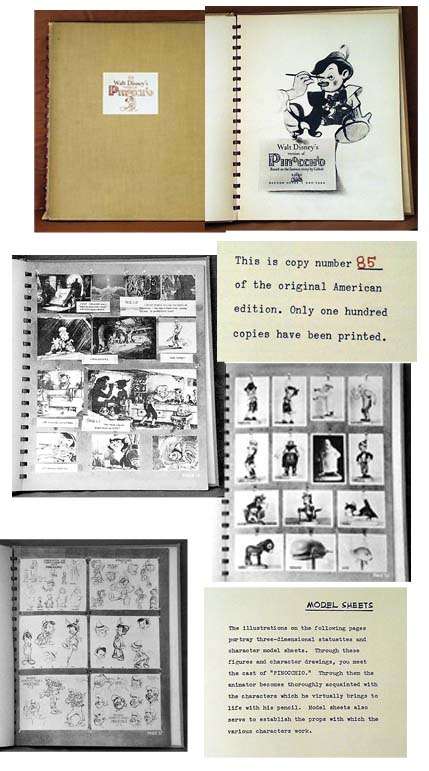
Finally: as some of you know, the hardest to find book of them all about Disney is the Pinocchio book released by Random House and pictured here. It contains a very large number of storyboard drawings from the movie and its print run was only 100 copies.
- I was wondering if a generous soul would be prepared to photocopy the whole book for me (a long shot, but I love to try :-)
For those of you with very deep pockets, there seems to be a copy of the book still available on Cohen Books and Collectibles for $3,500.